BYD Atto 2 for Europe: Compact Dimensions, Ample Space - 312 and 420 Kilometers Range
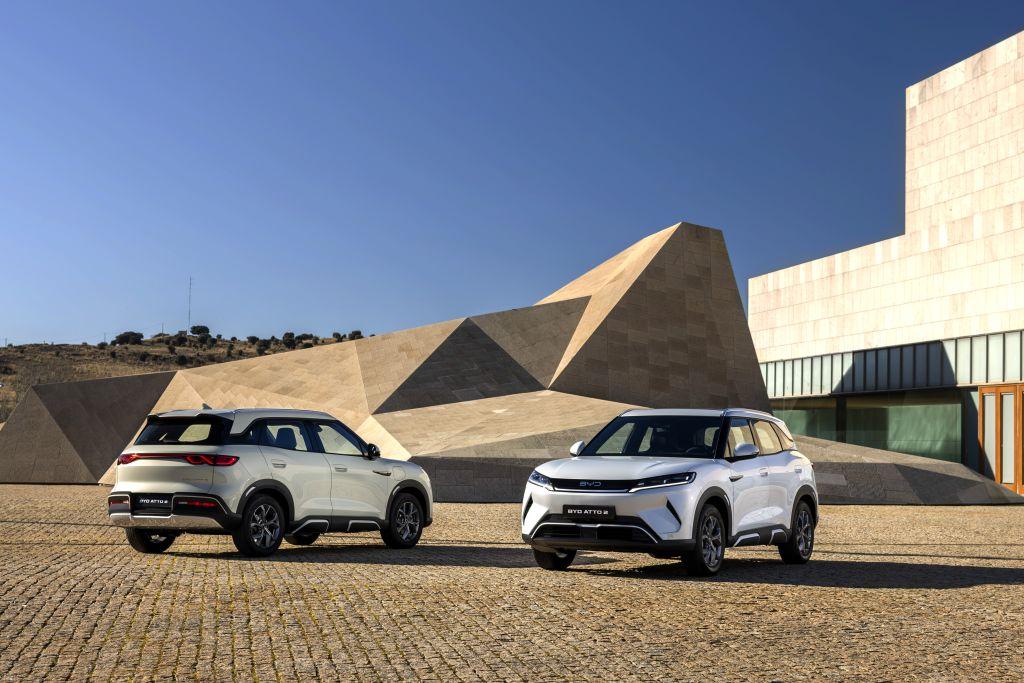
The Chinese electric vehicle manufacturer BYD has announced the launch of the compact electric SUV model Atto 2 in Europe. The brand's most affordable SUV for Europe to date is intended to combine compact dimensions with high agility. It features the revolutionary BYD Blade Battery and the innovative Cell-to-Body construction (CTB), state-of-the-art intelligent technology in the interior, and extensive standard equipment.
“The small car segment is incredibly popular here, and with the ATTO 2 we have a nimble and versatile vehicle that will appeal to this large potential customer base,” says Stella Li, Executive Vice President of BYD.
However, "small car" is relative: The Atto 2 slots into the compact SUV class and the format of a Kia EV3, measuring 4,310 mm in length, 1,830 mm in width, and a stately 1,675 mm in height, making it only 145 mm shorter and 45 mm narrower than the Atto 3. Accordingly, it also offers generous space. The relatively long wheelbase of 2,620 mm helps with this, although whether the improved approach angles at the front and rear, thanks to the short overhangs, will ever become relevant remains debatable. Visually, full-LED headlights and slender daytime running lights are distinctive. Aerodynamically, so-called air curtains help, which direct airflow around the wheels. At the rear, the roof spoiler and a continuous light strip are prominent.
Blade Battery stays flat
The so-called e-platform 3.0 in the case of the Atto 2 houses a Blade Battery with a capacity of 45.12 kWh, for the first time in a compact BYD model in Cell-to-Body construction (CTB), meaning the battery is fully integrated into the vehicle chassis, with the top cover of the battery serving as the floor for the passenger compartment. This is intended to save space or create space and ensure high body rigidity. The battery is meant to set standards in terms of safety, durability, and performance. The rectangular, long cells are not located in individual modules but are installed directly into the battery body. This allows for more cells to be accommodated in the same area than with conventional battery construction.
The battery uses lithium iron phosphate (LFP) as the cathode material, which is supposed to bring more safety as well as durability and environmental friendliness because it is 100% free of toxic heavy metals such as cobalt and nickel. LFP batteries also have higher resistance to extreme temperatures and are considered less sensitive to temperature fluctuations. This supposed longer life is promoted by the manufacturer. They also refer to the much-cited nail test, in which a nail is driven through the battery cells to test the thermal stability of the battery in extreme situations. A severe traffic accident is simulated.
Up to 400 liters of trunk space
The suspension configuration – MacPherson struts at the front and a torsion beam at the rear – offers a mix of quick responsiveness, agility, and comfort. The turning radius of 5.25 meters is compact for an SUV of this size. Additionally, the compact rear suspension allows for flexible use of the 400-liter cargo space. All versions come standard with 17-inch alloy wheels. Ventilated disc brakes are used at the front, while the SUV uses regular disc brakes at the rear. The front motor delivers 130 kW (177 hp) and provides 290 Nm of torque, allowing the electric SUV to sprint from 0 to 100 km/h in 7.9 seconds and reach a top speed of 160 km/h. With a 45.12 kWh battery, the electric vehicle achieves a combined WLTP range of 312 km, and up to 463 km in urban traffic. The traditionally modest charging performance allows the battery to be charged from 10 to 80 percent in 37 minutes using a 65-kW DC charger, and from 30 to 80 percent in 28 minutes. With the 11-kW AC charger, the battery can be charged from zero to 100 percent in five and a half hours.
Interior with clear lines
The cockpit reflects the exterior design with simple and clear lines. Important control functions are located on adjacent buttons. These include, for example, the activation of ventilation, the rotary knob for the sound system volume, and the switch for the driving modes. There are four driving modes: Eco, Normal, Sport, and Snow. The standard panoramic glass roof creates a bright ambiance. A standard 8.8-inch instrument display is included. The infotainment system comes with a 10.1-inch display in the Active version and a 12.8-inch screen in the Boost edition. Apps like Spotify, YouTube, Zoom, and Amazon Music are always usable. Furthermore, the vehicle is capable of Over-the-Air Updates (OTA) and connects wirelessly with Android Auto and Apple CarPlay.
Practically Inclined
Mobile devices are charged via a 60-W USB-C or 7.5-W USB-A connection, and there are two more USB ports in the rear, with a wireless 15-watt charging spot in the middle in the Boost edition. Also on board is a voice control system: By saying “Hi BYD,” you can manage functions like heating, air conditioning, and the electrically opening and closing windows. Even if Android Auto or Apple CarPlay is active, the interior temperature can be adjusted by swiping three fingers up and down. Additionally, you can control the ventilation strength by swiping from one side to the other. More importantly, the rear compartment holds 400 liters and expands to a capacity of up to 1,340 liters with the rear seats folded down, including a flat loading floor.
Karaoke Function On Board
Access to the vehicle is either via a key or using NFC technology with a key card, smartphone, or other electronic device. Remote access via smartphone using the BYD app also allows users to control various vehicle functions, including pre-conditioning the interior and activating the seat heating. Typically Chinese: The infotainment system features a karaoke function, developed in collaboration with the leading karaoke software brand Stingray.
```Heat Pump and V2L Series
A heat pump is standard on board, which is intended to improve range and efficiency in winter. Contemporary but a treat in this class is the Vehicle-to-Load (V2L) function, which allows devices to operate via an external socket with up to 3.3 kW, from the coffee machine to the vacuum cleaner, as the manufacturer advertises. The equipment is traditionally complete, and the configuration in two lines is clear, with no differences in the drive and battery. The base model already includes LED daytime running lights, a panoramic roof with electrically adjustable sunshade, intelligent high beam control, NFC access via key, key card, smartphone, or portable electronic device, rear parking sensors and a reversing camera, a rotatable 10.1-inch touchscreen infotainment system, vegan leather upholstery and Vehicle-to-Load. In the Boost equipment, there are heated front seats and a heated steering wheel, ambient lighting in the interior, power-folding side mirrors, front parking sensors, as well as a 360-degree camera and a rotatable multimedia screen with 12.8 inches, a wireless inductive 15-W charging station, and an upgraded audio system with eight speakers.
Complete Driver Assistance
In terms of driver assistance, nothing is left to chance: It includes a driver monitoring system (DMS), adaptive and intelligent cruise control (ACC/ICC), traffic sign recognition including speed adjustment (TSR), a lane-keeping assistant, a lane change assistant (LCA), a blind spot assistant (BSD), a door opening warning (DOW), an automatic emergency braking assistant (AEB), traction control, hill descent control, a forward and rear collision warning (FCW, RCW) and a rear cross-traffic alert (RCTA) with cross-traffic brake (RTCB). Over the course of the year, a third Comfort variant will be introduced, which is said to offer a longer range of up to 420 kilometers and combine a more powerful engine. Additionally, there will be a wireless 50-W charging pad in the center console, two USB-C ports in the rear, a lumbar support in the driver's seat, and privacy glass in the rear. The complete specifications and prices of the Atto 2 Comfort will be announced shortly before its market launch in the third quarter of 2025.
Translated automatically from German.