RWTH Aachen: AI enables more efficient battery production
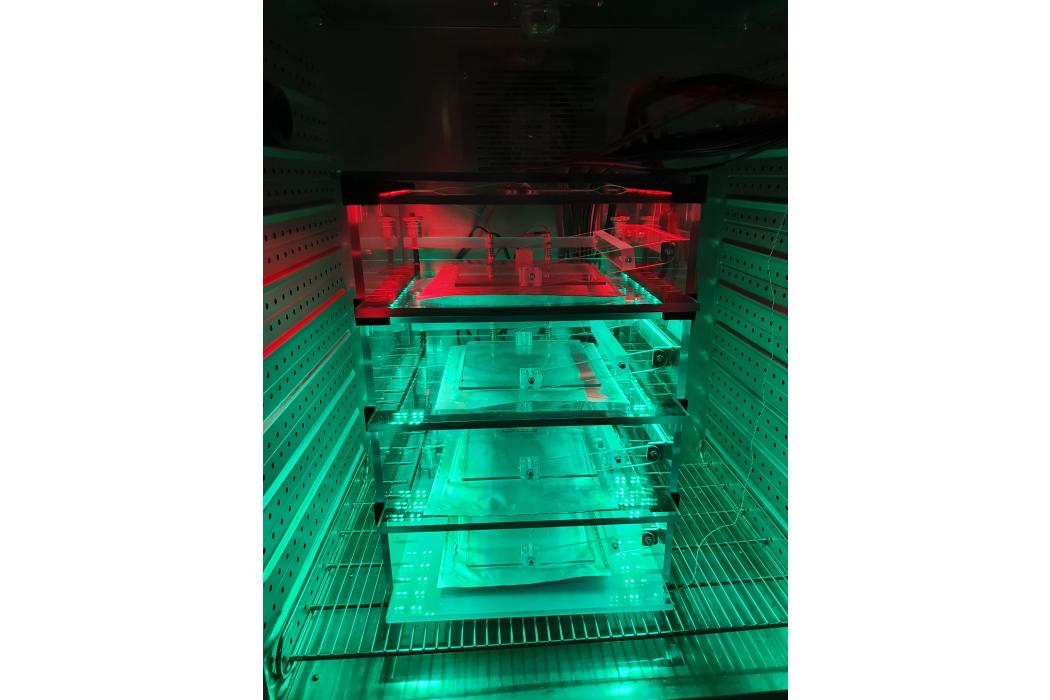
The chair "Production Engineering of E-Mobility Components" (PEM) at RWTH Aachen, together with three other nationally leading institutes, has completed the project "InForm", funded by the Federal Ministry of Education and Research, after more than three and a half years. In the course of the joint project, the scientific actors developed AI-supported processes that allow for a significantly earlier optimization and assessment of battery cell properties than previously possible.
"With the help of digitization and artificial intelligence, the production of lithium-ion batteries can be accelerated while process costs decrease and quality increases," explains PEM leader Professor Achim Kampker.
Process time shortened by around 70%
Using AI and physicochemical models, the project partners specifically intervened in the sub-step of formation to achieve positive long-term effects and ensure a safe process. In doing so, the process time was initially reduced by around 50% through a pulse formation protocol and subsequently by a further 20% with the support of AI. This demonstrated that it is possible to form tailor-made batteries with shortened process times, for example, with improved electrical properties or longer lifespan, and to quickly develop procedures that meet demand.
```"Being able to produce batteries that are more individualized and with automated quality assessment is a key factor in the future competition for a competitive battery production," says Kampker.
The “Formation”
The “formation” is the last production step that significantly determines the future performance, safety, and longevity of the lithium-ion battery. During this process, the assembled battery cell is charged and discharged for the first time. In the process, the “Solid-Electrolyte Interphase” (SEI) layer, which is crucial for the cell’s later performance characteristics, forms on the electrodes. Through electrochemical impedance spectroscopy, researchers observed the resistance of the SEI during formation.
"This allows conclusions to be drawn about the correct formation of the SEI and the resulting lithium consumption – a quality criterion both for the discharge capacity after formation and for long-term behavior," says PEM's project manager Tobias Robben: "Instead of being able to assess the production success only with the 'End of Line' test, it is therefore possible to determine battery quality beforehand without any process interruption."
In this way, rejects could occur much earlier in the process, which would significantly save time and costs.
Renowned Partners
The project was an accompanying project of the "Intelligent Battery Cell Production" (InZePro) competence cluster, funded by the Federal Government. The partners of RWTH's PEM chair included the Helmholtz Institute Ulm (HIU) for Electrochemical Energy Storage of the Karlsruhe Institute of Technology, the Center for Solar Energy and Hydrogen Research Baden-Württemberg (ZSW), and the Institute for High Voltage Technology and Energy Systems (elenia) at TU Braunschweig.
More information about "InForm" can be found here.
About PEM
The "Production Engineering of E-Mobility Components" (PEM) chair at RWTH Aachen was founded in 2014 by "StreetScooter" co-inventor Professor Achim Kampker, who, in addition to his expertise in components and concepts of electromobility in teaching and research, also has many years of experience in the management of start-ups and established companies. The PEM team, within numerous research groups, is dedicated to all aspects of the development, manufacturing, and recycling of battery systems, electric motors, hydrogen technologies, and their respective components, as well as their integration, especially in heavy commercial vehicles.
At the headquarters in the German-Dutch Avantis industrial park, as well as in the electromobility laboratory on the "RWTH Aachen Campus" and in an electric truck research workshop in the east of Aachen, a total of 76 researchers, 31 non-academic staff, and around 120 student assistants are employed. The PEM team is active in teaching, as well as in nationally and internationally funded research projects and collaborations with renowned industry partners. The focus is always on sustainability and cost reduction - with the goal of a seamless "innovation chain" from basic research to large-scale manufacturing in the immediate vicinity. In this context, the PEM chair provides the breeding ground for spin-offs and mobility products, some of which are interconnected.
Translated automatically from German.